Motorcycle Camping Gear: Why Ordinary Camping Gear Isn’t Enough – Podcast: We chat with Jim Martin on Adventure Rider Radio.
Most riders start shopping long before they start thinking.
Scroll through YouTube, Facebook or any adventure motorbike riding forum, and you’ll quickly find endless debates about the best motorcycle travel tent, the lightest sleeping bag or the multi-fuel stove that boils water thirty seconds faster than the next one. Before long you’re comparing weights, pack sizes and materials, convinced that somewhere out there is the perfect motorcycle camping setup.
After more than fifteen years of travelling the world by motorcycle, we’ve come to a different conclusion.
Start with the experience, not the equipment
There is no perfect camping setup.
That was one of the topics we discussed recently with Jim Martin on Adventure Rider Radio. Alongside Ben Williams from Moto Camp Nerd, the conversation centred around a simple idea that many riders overlook: before you buy camping gear, decide what kind of traveller you want to be.
It’s surprisingly easy to spend thousands on camping gear that suits somebody else’s style of travel.
Some riders leave camp before sunrise, cover 700 kilometres and only stop long enough to sleep before doing it all again the next morning. For them, a lightweight tent and the smallest possible sleeping kit make perfect sense.
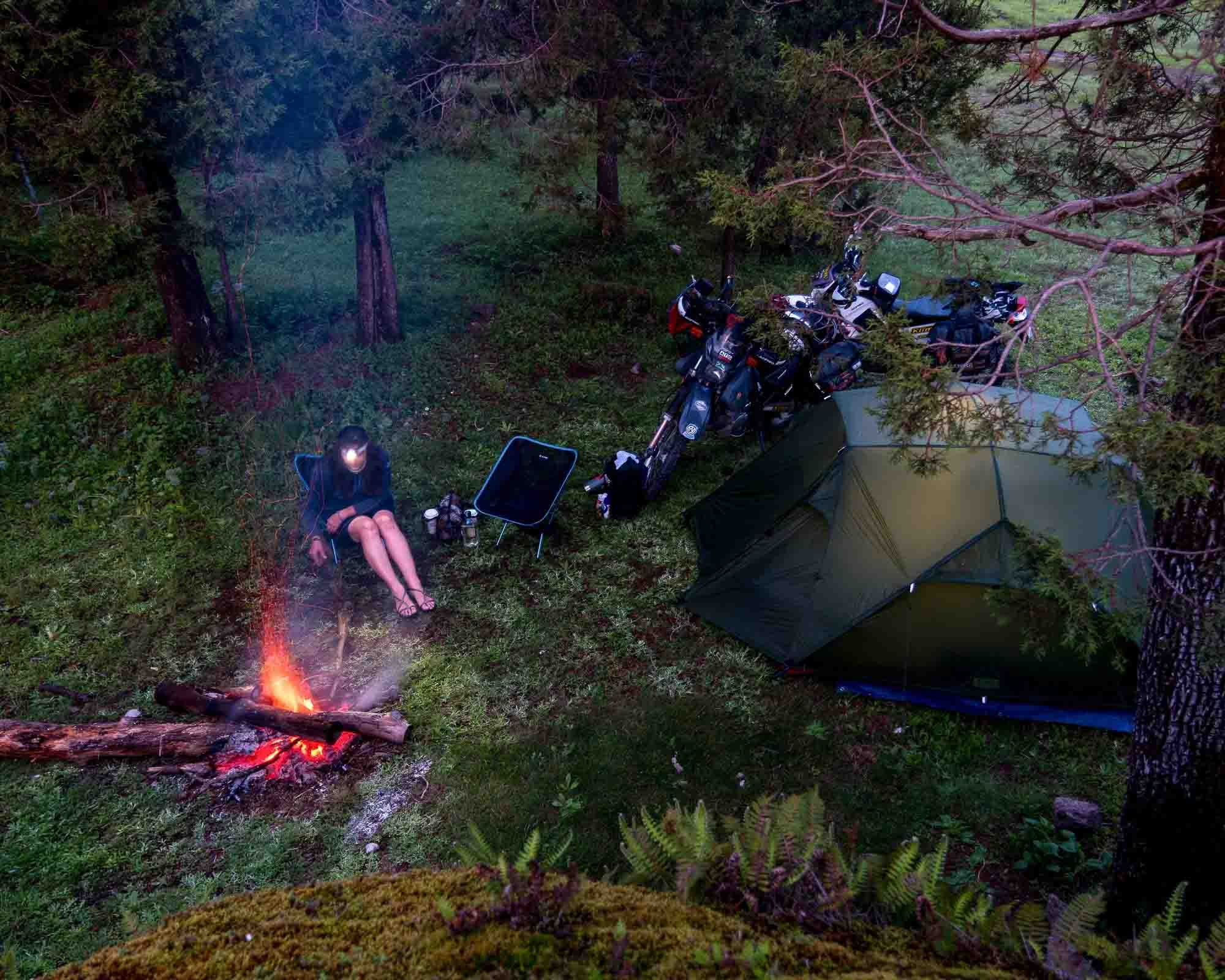
Others enjoy reaching camp early. They collect firewood, brew coffee, cook dinner, read a book and spend the evening watching the sun disappear behind the mountains. Those riders may happily carry a larger chair, a more comfortable mattress and proper cooking gear because camping is part of the adventure, not simply a place to sleep.
Neither approach is better than the other.
They’re simply different.
Once you know which rider you are, choosing camping gear becomes far easier.
Experience changes everything
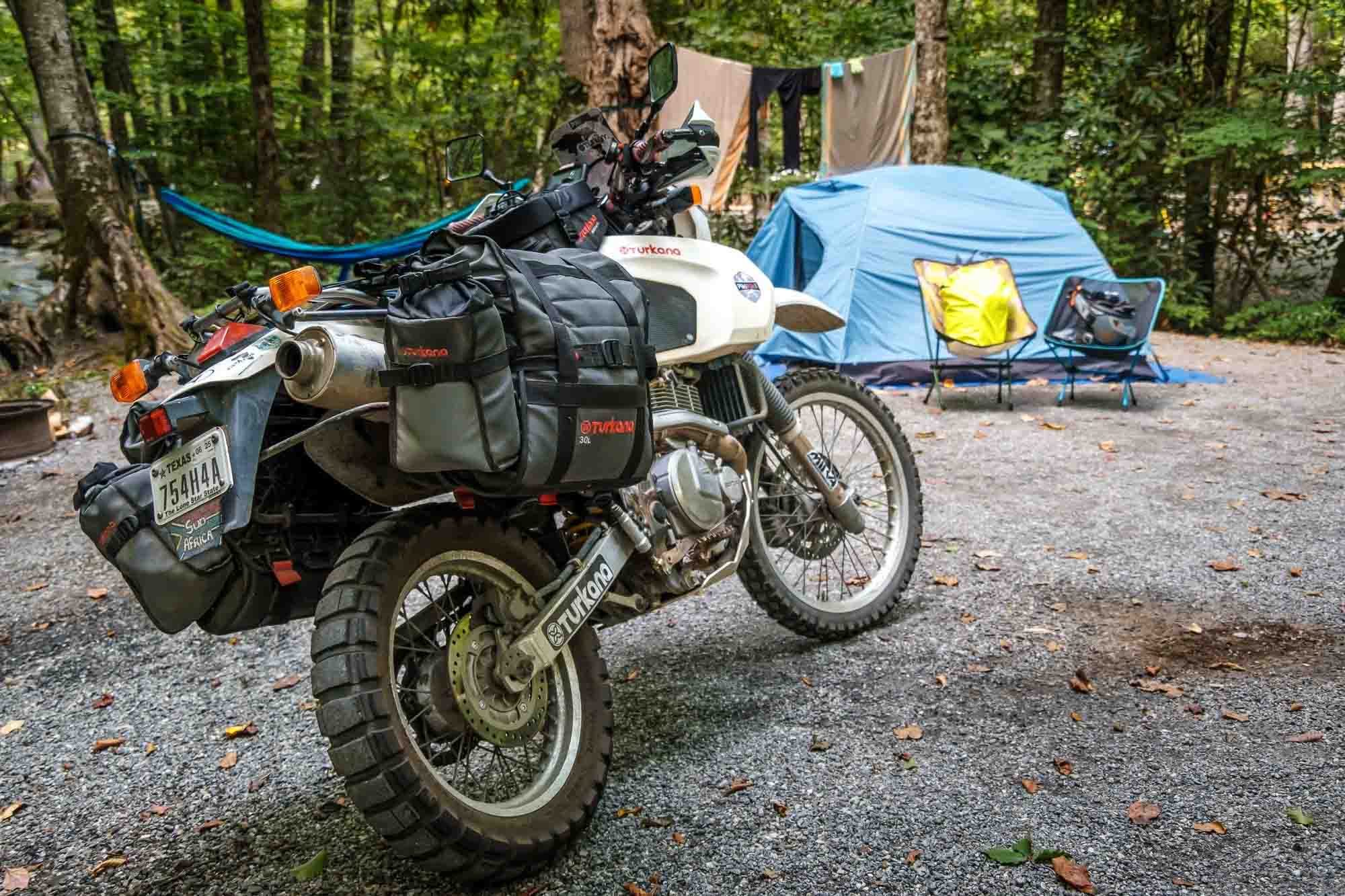
When Elsebie and I left South Africa in 2010, we packed for almost every possible situation we could imagine.
Looking back, we carried plenty of things we barely used. Like most new travellers, we packed our fears. What if we needed this? What if that broke? What if we couldn’t buy something later?
Over time, experience replaced uncertainty.
Some items disappeared from our luggage altogether. Others became things we’d never leave home without. Our camping system evolved, not because someone released newer gear, but because we learnt what genuinely made life on the road better.
That’s something every long-term traveller goes through. Your first camping setup probably won’t be your last, and that’s perfectly normal.
Don’t let weight become an obsession
Adventure riders love talking about grams.
Saving 300 grams here and another 500 grams there somehow becomes a badge of honour. Of course, lighter luggage makes a motorcycle easier to handle, especially off-road, but weight isn’t the only consideration.
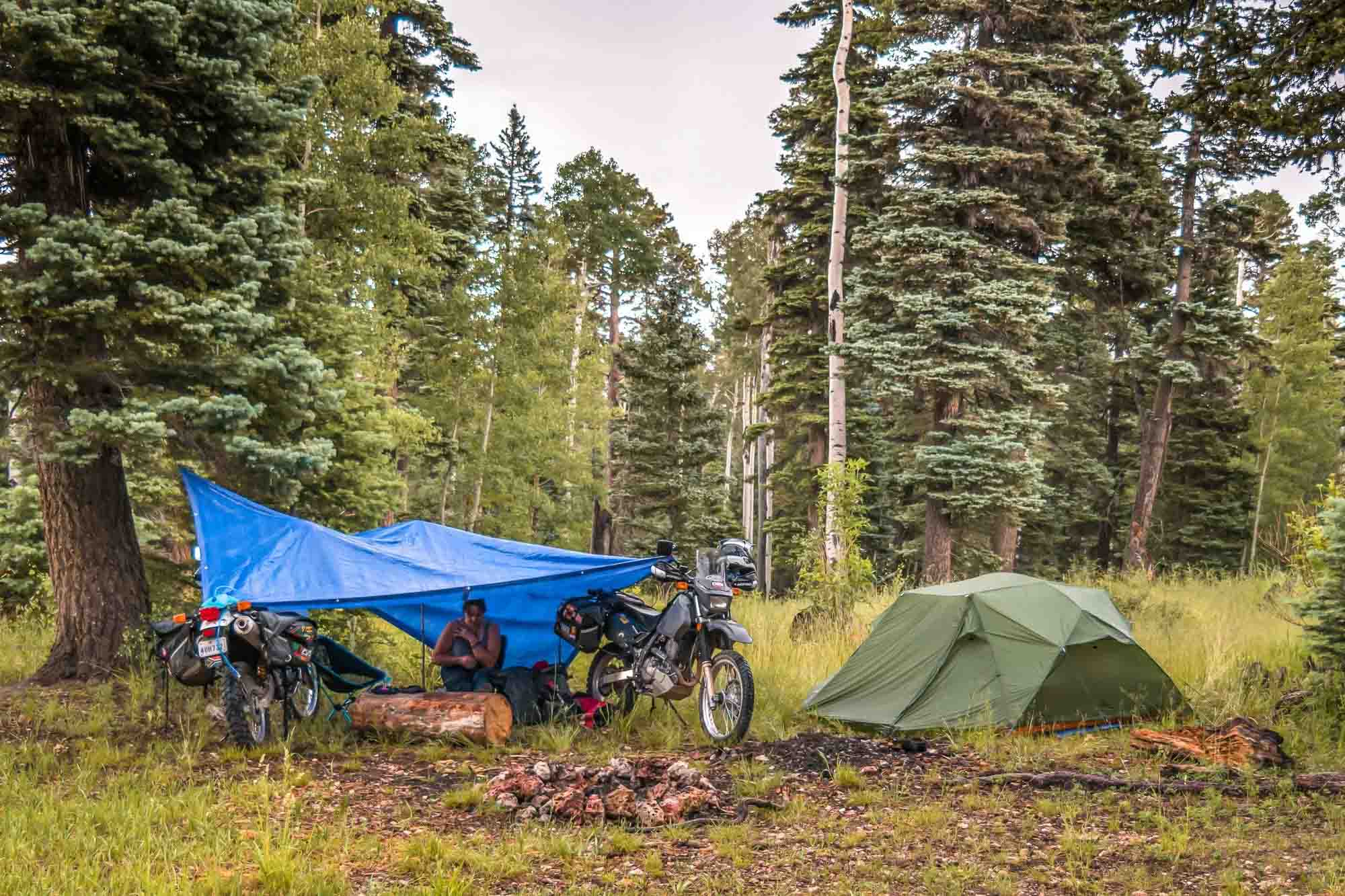
Comfort has value too. After riding through rain for eight hours, sleeping well matters. A decent meal matters. Somewhere comfortable to sit while watching the sunset matters.
Sometimes carrying an extra kilogram is a far better decision than spending the evening wishing you’d brought a chair. The goal isn’t to carry as little as possible.
The goal is to carry what makes your journey better.
Build your own system
One of the biggest takeaways from our conversation with Jim is that there are very few universal answers.
Borrow ideas from experienced travellers. Read reviews. Listen to podcasts. Ask questions. But don’t assume someone else’s packing list should become yours.
Your motorcycle is different. Your budget is different. Your trips are different. Most importantly, your idea of a great adventure is probably different too.
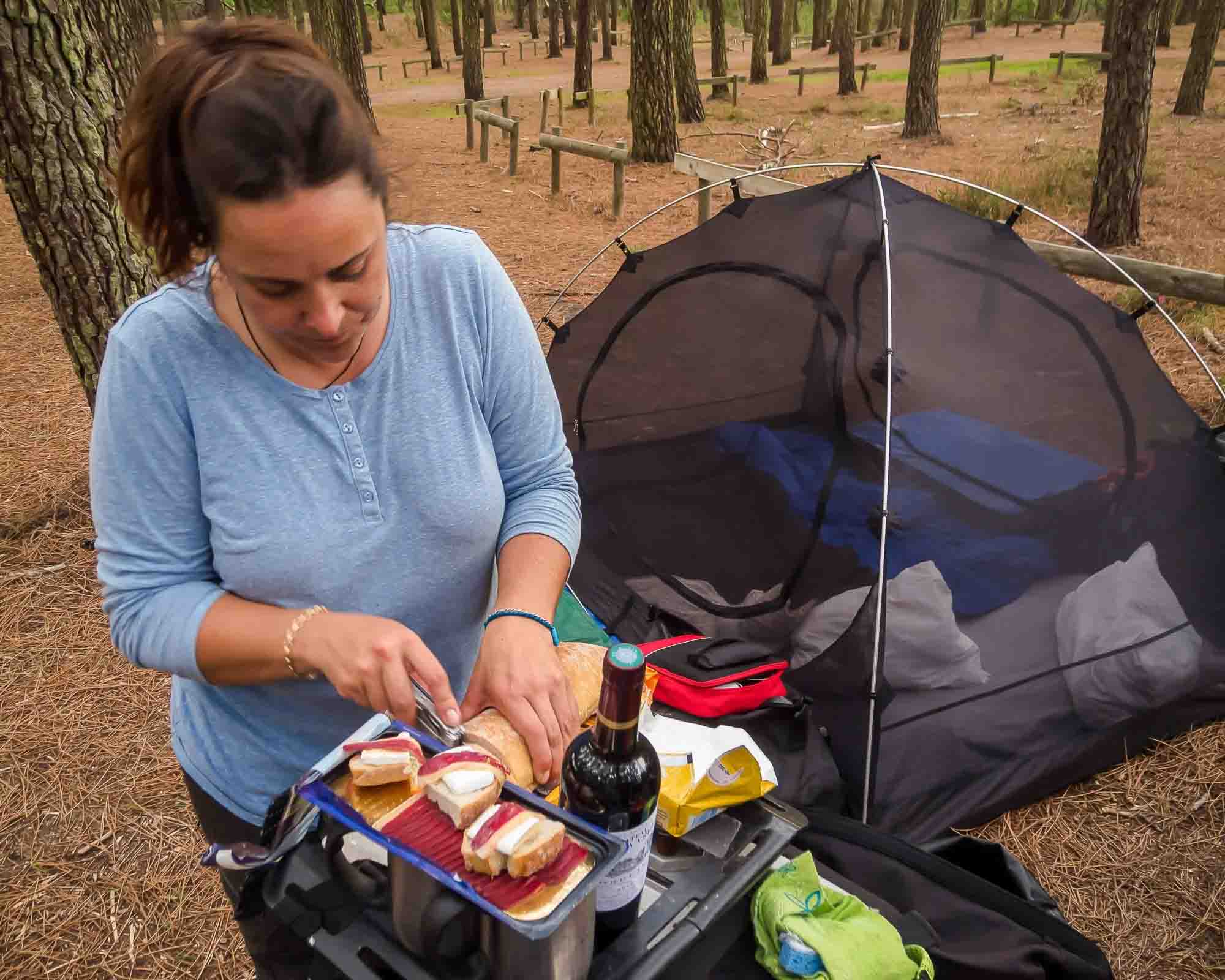
The best motorcycle camping setup isn’t determined by YouTube reviews or the latest product launch. It’s built slowly through experience, one trip at a time.
After thousands of nights on the road, we’ve learnt that the gear you remember least is usually the gear you chose best. It quietly does its job while you remember the campfires, the conversations with strangers, the mountain passes and the roads that led you there.
That’s what really matters.